

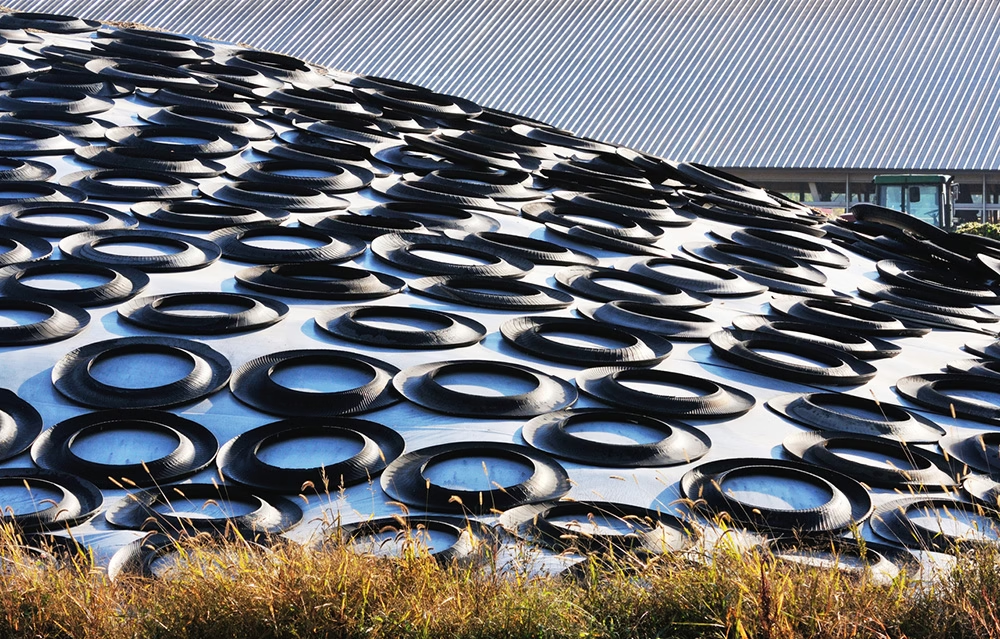
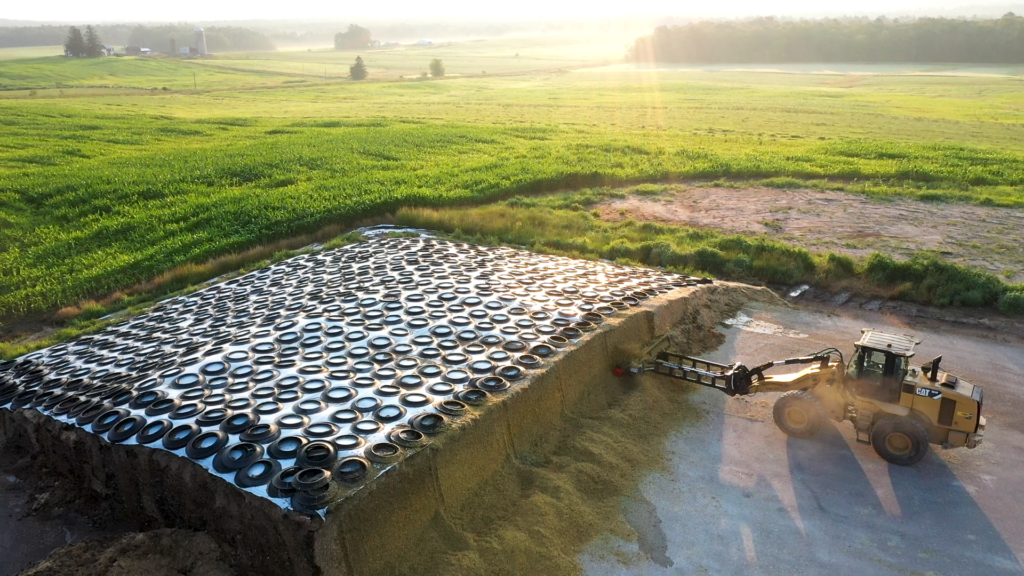
For generations, the "tire pile" has been a fixture on dairy farms across the Upper Midwest. It’s a resource bank for harvest time—a heap of free weights waiting to be thrown onto the bunker to seal in the year's feed. For a long time, the logic was simple: the tires were free, heavy, and available. Why fix what isn't broken?
However, as we learn more about vector-borne diseases and herd health, the true cost of those "free" whole tires is becoming impossible to ignore. For farmers in Central Wisconsin, where our wet summers create the perfect storm for pests, the shift from whole tires to silage tire sidewalls isn't just about convenience; it is a matter of public health and veterinary safety.
The Hidden Danger: West Nile Virus on the Farm
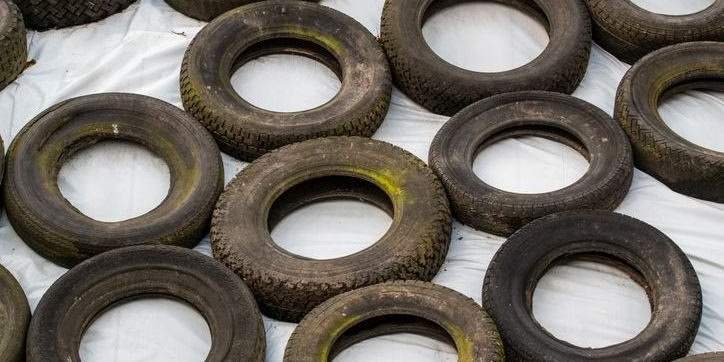
If you walk past a pile of whole scrap tires in July, you know the sound. The hum of mosquitoes is undeniable. A whole tire laying flat on a bunker or in a storage pile is essentially a perfectly engineered incubator for mosquito larvae. The inner rim traps rainwater, leaves, and organic debris. The black rubber absorbs the sun, heating the water to the ideal temperature for hatching.
Research from agricultural extensions and state health departments has flagged agricultural tire piles as primary breeding grounds for the Culex mosquito, the primary vector for West Nile Virus (WNV).
While we often think of West Nile as a human threat—and it certainly is for your family and employees—it also impacts livestock. Horses are particularly vulnerable, but the sheer nuisance factor of a mosquito cloud reduces cow comfort, lowers feed intake, and increases stress in the herd.
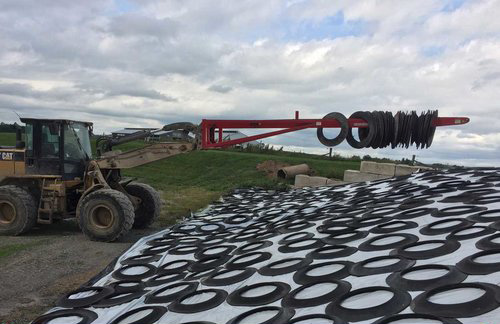
This is where silage tire sidewalls change the game. By mechanically removing the tread, we transform the tire into two flat rings.
- Zero Water Retention: A sidewall cannot hold water. Rain passes right through the center or runs off the side.
- Pest Reduction: Without standing water, the mosquito breeding cycle is broken.
- Sanitation: You eliminate the stagnant "tire slime" that makes uncovering the bunk such a miserable, smelly job in the winter.
For a deeper dive into how state agencies are fighting this issue, the Vermont Agency of Agriculture has published extensive data on why removing whole tires is critical for vector-borne disease control.
Hardware Disease: The Risk of "Free" Radials
Beyond the bugs, there is a mechanical danger lurking in scrap tires: steel wire.
Most modern car and truck tires are "radials." They rely on belts of steel wire mesh for strength. As these tires age and sit out in the Wisconsin elements (freeze-thaw cycles, UV exposure), the rubber degrades. Eventually, the steel wires begin to protrude, creating "whiskers" or breaking off entirely.
When a wire falls into the silage, it ends up in the TMR mixer and, eventually, in the cow. Hardware Disease (Traumatic Reticuloperitonitis) occurs when that metal object pierces the reticulum wall, potentially hitting the heart or other organs. It is a painful, often fatal condition that results in the total loss of the animal.
At Midwest Sidewalls, we focus heavily on Bias-Ply tires and nylon truck sidewalls.
Clean Cut Processing: Our processing facility in Curtiss, WI, is designed to ensure that the silage tire sidewalls we deliver are clean and stable. We aren't just shipping waste; we are manufacturing a product.up your farm.
Nylon vs. Steel: Bias-ply tires typically use nylon cords rather than the heavy steel mesh found in radials. They are safer to handle (no jagged wires cutting your hands) and pose a significantly lower risk to your mixer wagons and your cows.
The Engineering of Cover Weight
Setting aside health and safety, do silage tire sidewalls actually work as weights?
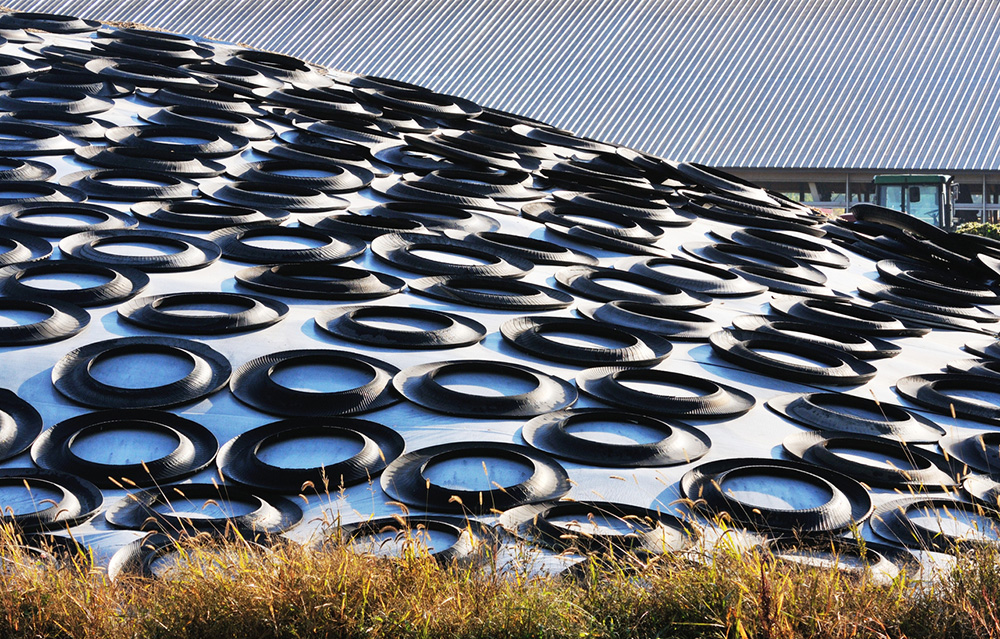
The physics of holding down plastic is about preventing "billowing." When wind gets under the plastic, it pumps air over the silage, restarting aerobic fermentation and spoiling the feed. You need consistent, distributed weight to prevent this.
A whole tire is heavy (often 50+ lbs with water), but it covers a relatively small surface area. A sidewall weighs approximately 24 to 30 lbs, but because it is flat, it has a lower profile that catches less wind.
- Surface Area Math: One whole tire yields two sidewalls. By splitting the tire, you double your coverage area.
- The Stack: Because they are flat, sidewalls stack neatly on pallets or spindles. You can transport hundreds of them on a single trailer or flatbed, whereas whole tires are a logistical nightmare to move.
Local Sustainability: Turning Waste into a Resource
We are proud to be a local business based in Curtiss, WI. We see ourselves as part of the regional agricultural ecosystem. We take a waste product (scrap tires) that would otherwise clog up local landfills or sit in ditches, and we upcycle it into a permanent farm asset.
When you order silage tire sidewalls from us, you aren't just buying rubber rings; you are cleaning up the community. You are removing the water-holding reservoirs that plague our neighbors with mosquitoes and ensuring that the tires end up serving a productive purpose.
Planning for Harvest: The Sidewall Calculator
One of the most common questions we get is, "How many do I need?"
We recommend using our simple formula to ensure you aren't scrambling for weights when the choppers are already rolling:
(Pile Length x Pile Width) / 8 = Sidewalls Needed
For example, if you have a drive-over pile that is 100 feet long and 50 feet wide:
- 100 x 50 = 5,000 sq ft.
- 5,000 / 8 = 625 Sidewalls.
Don't wait until the corn is tasseled to make the switch. If you are ready to clean up your bunk and protect your herd from disease, check out our full inventory of silage tire sidewalls and get a quote today.