

The "Covering Party" is Over: Solving the Labor Crisis with the Right Equipment
It’s 8:00 PM in late September. The choppers have just pulled out of the yard. The bunker is packed, the plastic is laid out, and now comes the most dreaded phrase in dairy farming: "Time to throw tires."
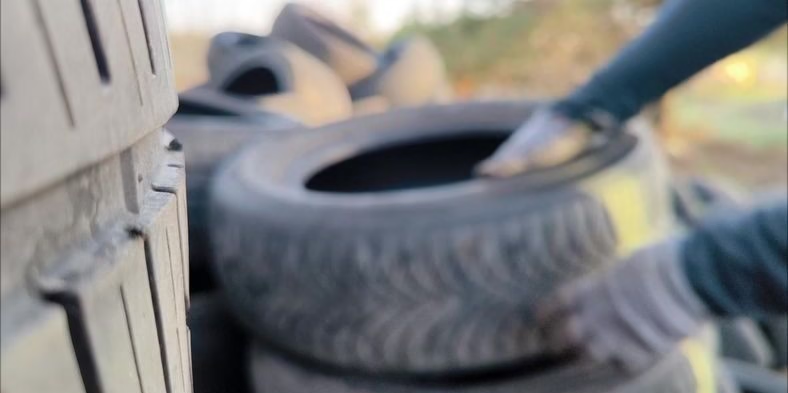
For decades, covering the pile was a manual slog. It required a crew of six to ten people, trudging up slippery plastic slopes, dragging dirty tires, and tossing them into place until midnight. But in today's agricultural economy, that model is breaking down. Labor is scarce, wages are rising, and finding a crew willing to do that kind of back-breaking work is getting harder every season.
This is where modern silage covering equipment comes in. At Midwest Sidewalls, we believe that you shouldn't have to break your back to seal your feed.
The Tire Shooter: Automation for the Bunker
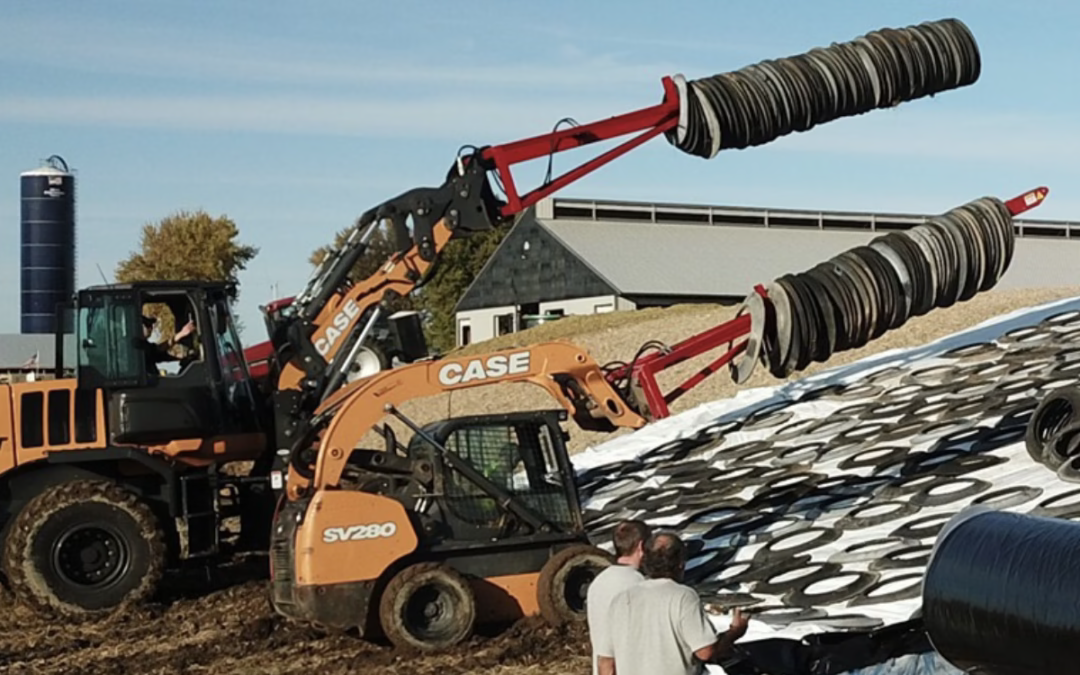
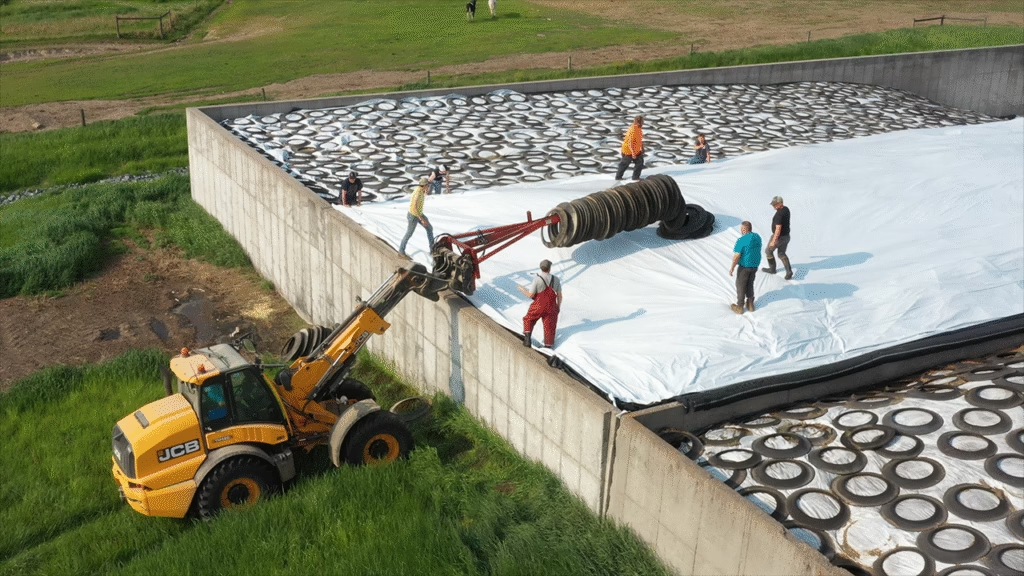
The core of our equipment lineup is the Tire Shooter. This isn't just a grapple bucket; it is a specialized hydraulic tool designed specifically for placing sidewalls.
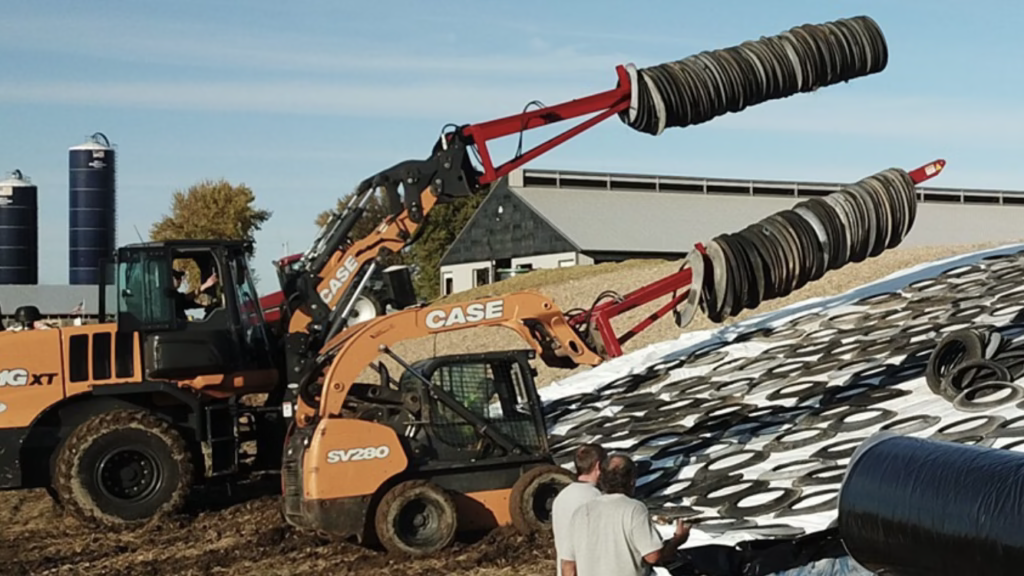
How It Works: The Tire Shooter mounts to your skid steer, telehandler, or wheel loader. It features a long boom (available in 16-foot or 23-foot models) equipped with a hydraulic conveyor chain.
- Load: You tilt the boom back and drive into a stack of sidewalls. The unit can pick up 70 to 110 sidewalls in a single scoop.
- Position: You drive up the side of the bunker or stay at the bottom if using a long-reach telehandler.
- Shoot: Activate the hydraulics, and the chain "shoots" the sidewalls off the end of the boom.
You can gently place tires right at your feet or launch them to the top of the pile. The operator essentially "paints" the plastic with rubber weights without ever leaving the cab.
The Labor Math: 5 Guys vs. 1 Machine
The ROI on silage covering equipment is immediate when you look at the labor hours.
- The Old Way: 6 people x 4 hours = 24 Man-Hours. Plus the risk of fatigue and injury.
- The Tire Shooter Way: 1 Operator (Shooter) + 2 People (Positioning) x 2 Hours = 6 Man-Hours.
That is a 75% reduction in labor hours. More importantly, it changes who can do the job. You don't need a team of linebackers to throw heavy tires. With the Tire Shooter doing the heavy lifting, older family members or younger staff can manage the covering process safely and effectively.
The "Hookup" Challenge: Will It Fit?
One of the biggest barriers to buying attachments is "Hook Confusion." Farmers often worry that a new piece of silage covering equipment won't fit their specific tractor.
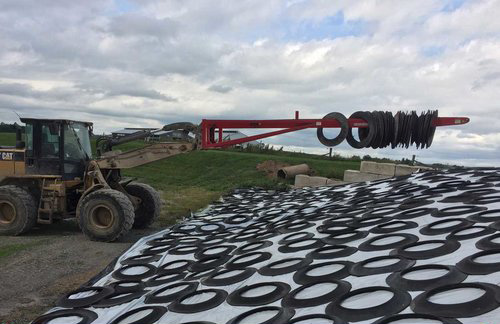
At Midwest Sidewalls, we are not just a retailer; we are a fabrication shop. We specialize in Custom Hookup Fabrication. We know that a Bobcat uses a different plate than a John Deere with a JRB hitch, which is different again from a CAT Fusion or a Volvo coupler.
We provide a simple guide to measuring your interface:
- Distance A: The vertical distance between the mounting ears.
- Distance B: The horizontal width.
- Pin Diameter: The size of the locking pins.
Whether you have an ancient wheel loader or a brand-new telehandler, we can weld the correct interface onto your Tire Shooter before it leaves our shop in Curtiss. You can view our guide on hookup options to see how we match your machine.
Try Before You Buy (The Wisconsin Advantage)
We know that farmers are skeptical of new gadgets. You want to know it works in the mud and the mess of harvest, not just in a YouTube video.
That is why we offer a Demo Program for farms in our local Wisconsin and Midwest service area. We are confident enough to let you try the Tire Shooter on your farm. As one of our customers put it, "We didn't send the free one back." Once you cover a pile with hydraulics, you never go back to hand-throwing.
If you are dreading the next "covering party," give us a call at (715) 613-5051. Let's get your farm set up with the silage covering equipment that turns a nightmare job into a one-man operation.